
What It Costs You to Wait
A garage door that won't open isn't just an inconvenience you work around for a few weeks. It's a car trapped inside (or outside) during an afternoon downpour, a side entry forced open and left unlocked because the main door is dead, and in a lot of cases, a small problem that turns into a bigger one. A misaligned sensor left alone can hide a fraying cable. A spring that's starting to sag from humidity and rust doesn't fix itself — it eventually snaps, sometimes while someone is standing under the door. Going into another stretch of South Florida heat and storm activity with a door that's acting up is how a $150 fix turns into a $600 one.
The Symptoms Worth Paying Attention To
Before any technician touches a tool, they want to know exactly how the door is failing. The symptom usually points to the cause before the inspection even starts:
- Nothing happens at all — no motor sound, no light, no click.
- The opener hums or clicks, but the door doesn't move.
- The door starts to open, then reverses or stops partway.
- The door opens fine with the wall switch but not the remote (or the reverse).
- The door feels extremely heavy when lifted by hand.
- One side of the door looks lower than the other, or it's visibly crooked in the track.
- You hear a loud bang from the garage at some point before it stopped working.
The Diagnostic Order a Technician Follows
1. Power and the Opener Itself
This is always step one because it's the fastest to rule out. A technician checks that the opener is actually getting power — a tripped breaker, an unplugged cord, or a dead outlet is a surprisingly common call, especially after a storm knocks power out and someone forgets to check the garage circuit when it comes back on. They'll also test the wall switch directly, since a wall switch that works but a remote that doesn't points somewhere else entirely.
2. The Safety Sensors
Every modern opener has two small sensors near the floor on each side of the door that have to see each other in a straight line. If they're misaligned, dirty, or blocked, the opener will refuse to close the door and often won't open it either, or it'll reverse mid-cycle. In Miami's climate, this is more common than people expect — humidity and grime build up on the lenses, afternoon sun glare can interfere, and even a slight bump from a stored bike or cooler can knock a sensor out of alignment. The fix here is usually quick: clean the lenses, re-aim the brackets, and confirm the indicator lights go solid.
3. Remote and Keypad Function
If the wall switch works but nothing else does, the problem is almost always a dead remote battery, a keypad that's lost its code, or an opener that needs to be reprogrammed. This is a five-minute fix, but it's worth ruling out before assuming anything mechanical is wrong.
4. The Springs
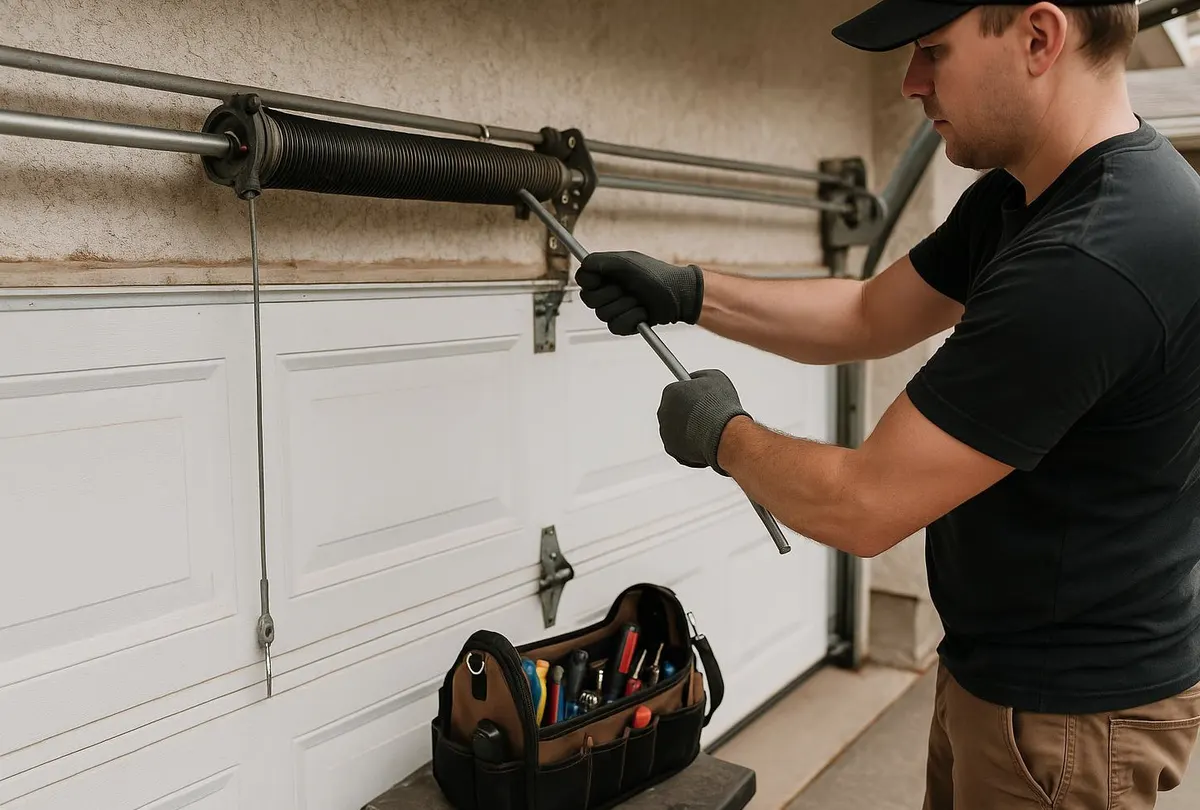
If the door won't budge even manually, or it feels like dead weight when lifted by hand, the springs are the next suspect. A loud bang at some point — even days earlier — is often the sound of a torsion spring letting go. Springs under constant tension are already working hard, and Miami's humidity speeds up rust and metal fatigue, shortening their working life compared to drier climates. A technician checks for a visible gap in a torsion spring or stretched-out coils on extension springs. This isn't a DIY fix: springs are under extreme tension and replacing them safely requires the right tools and experience.
5. Cables
Next, the cables that run alongside the springs get checked for fraying, slack, or a cable that's jumped off its drum. A snapped or loose cable will often let the door hang crooked on one side, which is a strong visual clue even before a tech touches anything.
6. Tracks and Rollers
If the door is visibly off to one side or grinding instead of sliding, the tracks get inspected for bends, debris, or rollers that have worn out or jumped the rail. Wind-driven debris during storm season and general humidity-related swelling of door panels can both throw a door slightly off alignment over time, even if it still seemed to work until it suddenly didn't.
7. The Opener's Motor and Gears
If everything mechanical checks out but the door still won't move, the opener's internal gear kit or motor itself may have worn out or failed. This is more common in older units and is usually the point where repair versus replacement becomes the real conversation.
8. Panel Damage
Finally, a technician looks at the panels themselves. A warped, dented, or swollen panel — sometimes from moisture intrusion or impact — can bind in the track and prevent smooth movement even if every mechanical part is working correctly.
When to Call Miami Garage Door Repair
If your door has gone completely silent, feels unusually heavy, or you heard a bang before it quit working, that's a spring or cable issue and not something to test further on your own. Miami Garage Door Repair handles Garage Door Spring Repair and Garage Door Cable Repair as same-day calls specifically because a door stuck in the wrong position is a security and safety issue, not just an inconvenience. If the door is crooked, grinding, or has jumped its track, that falls under our Off Track Door Repair service, and we'll check the rollers, track alignment, and panel condition in the same visit.
If your garage door in Miami, Coral Gables, Hialeah, Doral, Miami Springs, Sweetwater, Kendall, or Miami Beach has stopped working, call Miami Garage Door Repair today for fast, same-day service and honest pricing.